If one day you go on vacation to Panama, you can not forget about the molas. Colorful handicrafts of Guna culture. Molas create beautiful decorations for your home, but let’s find out a little more about this beautiful piece:
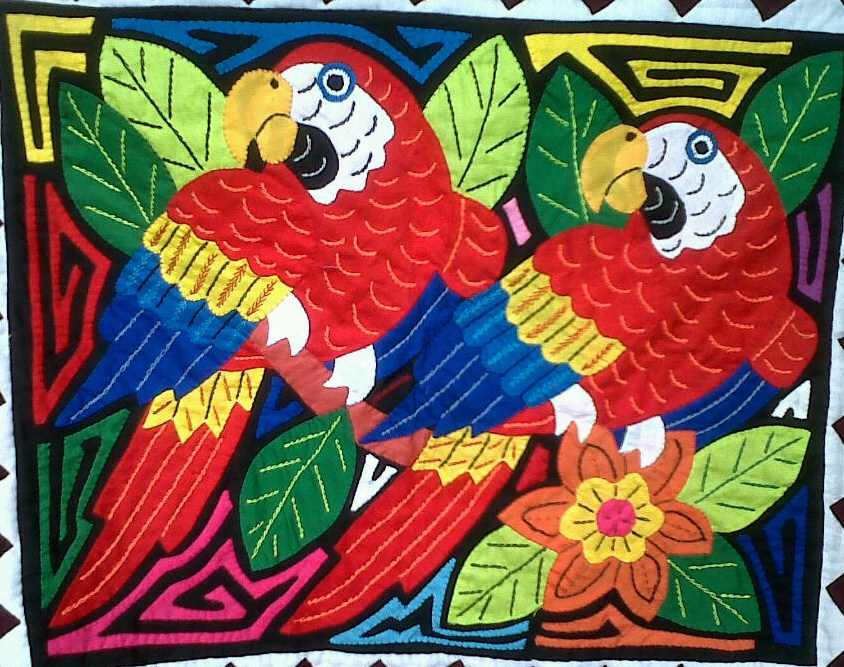
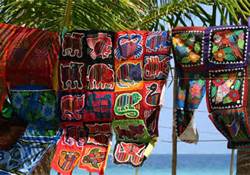

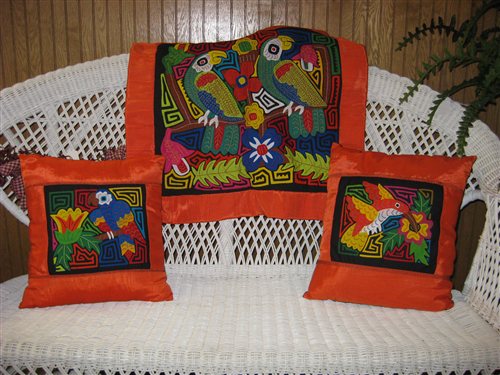

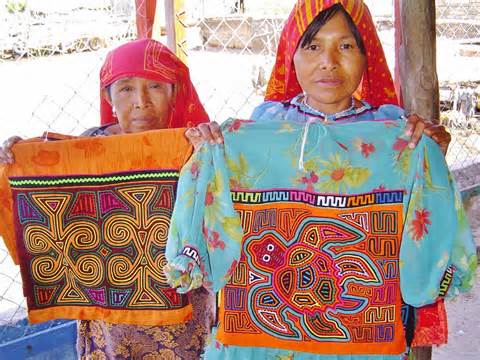
The mola forms part of the traditional costume of a Guna woman, two mola panels being incorporated as front and back panels in a blouse. The full costume traditionally includes a patterned wrapped skirt (saburet), a red and yellow headscarf (musue), arm and leg beads (wini), a gold nose ring (olasu) and earrings in addition to the mola blouse (dulemor).
In Dulegaya, the Kuna’s native language, “mola” means “shirt” or “clothing”. The mola originated with the tradition of Kuna women painting their bodies with geometrical designs, using available natural colours; in later years these same designs were woven in cotton, and later still, sewn using cloth bought from the European settlers of Panamá.
Molas have their origin in body painting. Only after colonization by the Spanish and contact with missionaries did the Kuna start to transfer their traditional geometric designs on fabric, first by painting directly on the fabric and later by using the technique of reverse application. It is not known for certain when this technique was first used. It is assumed that the oldest molas are between 150 and 170 years old.
As an inspiration for their designs, the Kuna first used the geometrical patterns which have been used for body painting before. In the past 50 years, they also started to depict realistic and abstract designs of flowers, sea animals and birds.
Depending on the tradition of each island, Kuna women begin with the crafting of molas either after they reach puberty, some even at a much younger age. Women who prefer to dress in western style are in the minority as well as in the communities in Panama City.
Molas have such an importance for the Guna and their traditional identity that they can be made responsible for the independent status of the Comarca San Blas. After the attempt of the Panamanian government to “westernize” the Kuna in the beginning of the 20th century by forbidding their customs, their language and their traditional dress, a huge wave of resistance arose. This resistance movement culminated in the Kuna revolution of 1925 where, after heavy battles, the Panamanian government had to make the concession of giving the Guna people the right to govern their own territory autonomously.
Helpful Sources:
http://es.wikipedia.org/wiki/Mola_(arte) http://www.thebalboainn.com/bi-links.htm
http://welcomeapanama.com/beta/playa-blanca-mapa-map/maria-arts-crafts-artesanias/
http://panama.quebarato.com.pa/panama/mola-en-cuadro__434543.html
http://www.quiltingdaily.com/media/p/24664.aspx
http://panamamio.com/content/photos/el-delicado-trabajo-de-elaborar-molas-san-blas
http://molabags.com/about/
 mymomisachef.com
How are you able to buy one of the molas?
Good question , thanks for asking, I have found some websites from travelers bringing those arts to United State, or if you have the opportunity to travel to the country you will find them in central parks. fairs, malls, for a good price if bought directly from Kuna(Guna) woman. These are a couple of websites you can check: http://www.panart.com/molainfo.htm
http://www.florymola.com/en/
I am planning a trip for December 2015 and will post more pictures of this beautiful art.